Understanding Economic Crisis

A summary of our Workshop 1 (January 9, 2026)
$17TUS household wealth destroyed in 2008 | 8.7MAmerican jobs lost, 2008-2010 | 53%Dow Jones fell from peak to trough | $70KEstimated lifetime income loss per American |
Numbers like these are not just statistics. Behind each one is a family that lost a home, a worker who spent months unemployed, a small business that could not access a loan. Economic crises are among the most destructive forces in modern society — yet they are not acts of nature. They are the product of human decisions, human psychology, and human-built systems that can be understood, and, with enough foresight, prevented.
This lesson is your foundation. By the end, you will be able to identify the five major types of economic crisis, explain what makes financial systems fragile, understand why rational people do irrational things during a collapse, and describe the tools governments and central banks use to fight back. We will travel from the tulip fields of 17th century Holland to the boardrooms of Wall Street in 2008 — because the same forces that drove those Dutch merchants to bankruptcy are the same forces that almost ended the global financial system.
Part 1: What Is an Economic Crisis?

Figure 1.1: GDP growth collapses during an economic crisis. The 2008–09 recession saw US GDP contract by 4.3% — the worst since the Great Depression.
The Broad Definition
An economic crisis is a macroeconomic event defined by a sharp, sustained, and negative deviation from the normal path of economic activity. This is more than a bad quarter — it is a structural rupture in the productive capacity of society, felt through three core indicators:
Real Output (GDP): Significant GDP contraction — not just slow growth, but an absolute shrinkage. The US economy lost 4.3% of its total output between 2007 and 2009.
Employment: Rapid, large-scale job destruction. US unemployment doubled from 5% in early 2007 to 10% in October 2009 — meaning roughly 8.7 million Americans lost their jobs.
Investment: A sharp decline in business spending on new equipment, factories, and research. When the future looks uncertain, companies stop building it.
💡 ANALOGY Think of an economic crisis like the difference between a headache and a heart attack. Normal economic volatility — a slow quarter, a sector downturn — is the headache: uncomfortable but manageable, and it passes. A crisis is the cardiac event: sudden, system-threatening, and often leaving permanent damage even after the patient technically recovers. The US economy 'recovered' from 2008, but millions of workers never fully got back the wages, savings, or career trajectories they lost. |
"The crisis was the result of human action and inaction, not of Mother Nature or computer models gone haywire."
— Financial Crisis Inquiry Commission, 2011
The Real Economy vs. The Financial Economy
To understand how crises work, you first need to distinguish between two distinct spheres:
The Real Economy Wages, factory output, physical goods, services, and jobs. Changes here define recessions and depressions — the lived experience of crisis. Example: A car factory shutting down, workers being laid off, consumer spending dropping. | The Financial Economy Stocks, bonds, derivatives, debt instruments, and credit. Crises often originate here first — then transmit to the real economy. Example: Mortgage-backed securities collapsing in value, banks losing confidence in each other. |
The critical insight is the feedback loop: financial crises transmit risk to the real economy, causing businesses to fail, workers to lose jobs, and consumption to collapse. But it starts in the world of paper. In 2008, the US housing and mortgage markets collapsed first — wiping out $17 trillion in US household net worth — before the broader recession fully materialized. The financial economy was the fuel; the real economy was the fire.
Part 2: Five Types of Economic Crisis
Not all crises are created equal. Misidentifying the type of crisis leads to the wrong treatment — a mistake the IMF famously made in the 1990s when it prescribed austerity measures to countries suffering from liquidity crises, making them far worse. Here are the five major categories:
Type 1: The Financial Crisis

Figure 2.1: A financial crisis is characterized by the sudden collapse in the value of financial assets. The 2008 crisis wiped out more value in 18 months than existed in most countries' entire economies.
A financial crisis occurs when financial assets — stocks, bonds, mortgage-backed securities, derivatives — rapidly and severely lose value, often due to the bursting of a speculative bubble. The mechanism is as follows: prices have been bid up far beyond their fundamental value, and when the first major participant loses confidence and sells, panic spreads. Buyers vanish, sellers multiply, prices collapse, and market liquidity — the ability to sell assets at a reasonable price — evaporates almost overnight.
🔑 KEY CONCEPT Key Feature: Asset Collapse + Liquidity Evaporation The hallmark of a financial crisis is not just falling prices but the disappearance of buyers. In a liquid market, you can always sell. In a crisis, there is no one on the other side of the trade. Assets that were worth millions on paper become unsellable at any price. |
💡 ANALOGY A financial crisis is like a game of musical chairs — played at global scale. Everyone knows the music will eventually stop, but the gains are so good that no one wants to leave the floor first. When the music stops, there aren't enough chairs for anyone, and the scramble destroys far more value than anyone made on the way up. |
📋 CASE STUDY Lehman Brothers, September 15, 2008 Lehman Brothers was the fourth-largest investment bank in the United States, with $600 billion in assets. But Lehman had financed those assets with borrowed money at a ratio of 30-to-1 — meaning for every $1 of its own equity, it had borrowed $30. A seemingly small 3% decline in the value of its assets was enough to wipe out its entire equity buffer. When its mortgage portfolio soured, Lehman could not refinance its short-term debt. On September 15, 2008, it filed for bankruptcy — the largest bankruptcy in US history. Within 24 hours, global credit markets froze, money market funds 'broke the buck,' and central banks around the world were injecting emergency liquidity. The lesson: 30:1 leverage transforms a manageable problem into a catastrophic one. Leverage is the amplifier — it magnifies both gains and losses. |
📣 QUOTE "I've looked into the abyss. We were truly on the brink." — Hank Paulson, US Treasury Secretary, September 2008 |
Type 2: The Banking Crisis

Figure 2.2: A bank run occurs when depositors, fearing their bank will fail, all attempt to withdraw at once — creating the very insolvency they feared.
A banking crisis occurs when the stability of the banking system itself comes under threat. Banks are unique because they sit at the center of the entire economic machine — they take deposits and make loans, they process payments, they allocate capital to productive uses. When banks fail or stop functioning, the whole economy seizes up. There are three mechanisms through which this happens:
Insolvency Risk: The bank's liabilities (what it owes) exceed its assets (what it owns). This usually happens through bad loans — loans that borrowers cannot repay. An insolvent bank cannot continue to operate. The only solutions are recapitalization, merger, or closure.
Liquidity Risk & Bank Runs: This is more insidious. A bank may be fundamentally solvent — its assets genuinely worth more than its liabilities — but it simply cannot convert those assets to cash fast enough to meet sudden withdrawal demands. A bank run is a self-fulfilling prophecy: if enough people believe a bank will fail and withdraw their funds, the bank fails even if it wouldn't have otherwise.
Credit Crunch: Even if individual banks don't fail outright, fear of failure causes banks to stop lending to each other and to businesses. Starved of credit, the real economy grinds to a halt. Companies cannot make payroll. Mortgages dry up. Investment stops. This transmission from banking stress to economic recession is one of the most destructive chains in economics.
💡 ANALOGY A banking crisis is like a blood clot in the financial system's circulatory network. Credit is the blood — it carries oxygen (capital) to the organs (businesses and households). When the banking system freezes, credit stops flowing, and the organs begin to die. Not because they themselves are sick, but because their oxygen supply has been cut off. |
During the 2008 crisis, the overnight interbank lending market — the mechanism by which banks lend to each other to meet short-term cash needs — effectively froze for nearly 72 hours following Lehman's collapse. Banks simply refused to lend to each other at any price. The consequences, had the Federal Reserve not intervened with emergency liquidity within days, would have included ATMs running out of cash and businesses unable to make payroll within a week.
📣 QUOTE "We were 24 hours away from the ATMs not working." — Alistair Darling, UK Chancellor of the Exchequer, 2008 |
📋 CASE STUDY Northern Rock, UK — September 2007: The First British Bank Run in 150 Years Northern Rock was a UK mortgage lender that had grown explosively by using an unusual funding strategy: instead of relying on stable, slow-moving retail deposits from customers, it borrowed money wholesale — short-term, from other financial institutions — to fund long-term 25-year mortgages. This is called a maturity mismatch: short-term liabilities funding long-term assets. When the US subprime crisis erupted in August 2007, wholesale lending markets froze. Northern Rock's funding pipeline vanished overnight. Despite being fundamentally solvent — its mortgage book was not particularly bad — it simply could not meet its short-term repayment obligations. On September 13, 2007, BBC News reported that Northern Rock had secretly requested emergency support from the Bank of England. By the morning of September 14, queues of anxious depositors stretched around the block outside every Northern Rock branch in Britain. In a single day, £1 billion was withdrawn. It was the first British bank run since Overend Gurney & Company in 1866. The UK government was forced to nationalize Northern Rock in February 2008, at an eventual taxpayer cost of £25 billion — for a bank that was, technically, not insolvent when the panic began. The lesson: A fundamentally sound bank can be destroyed by a crisis of confidence. Fear alone, once it reaches critical mass, creates the very catastrophe it feared. |
Type 3: The Currency Crisis

Figure 2.3: The Thai Baht lost over 40% of its value against the US dollar within months of its peg being abandoned in July 1997 — triggering a cascade across Southeast Asia.
A currency crisis occurs when a country's exchange rate collapses dramatically — typically when a fixed peg to another currency (most often the US dollar) cannot be maintained. The mechanics are brutal in their simplicity:
A country pegs its currency to the dollar, promising to maintain a fixed exchange rate. To do this, it must stand ready to buy its own currency using its reserves of foreign currency (dollars) whenever the exchange rate comes under pressure.
Speculators — hedge funds, investment banks, institutional investors — analyze whether the country has enough reserves to maintain the peg. If they believe it cannot, they begin selling the currency in massive quantities, accelerating the very depletion of reserves they're betting on.
The central bank burns through its foreign reserves buying back its currency. When reserves run dry, the peg collapses in a sudden, enormous devaluation — sometimes 30–50% in a single day.
The consequences are severe: companies that borrowed in foreign currencies (often dollars) suddenly find their debt has become 2x or 3x more expensive in local currency terms. Bankruptcies cascade.
💡 ANALOGY A currency peg defense is like a dam under rising flood pressure. The central bank uses its foreign reserves as reinforcement to hold back the flood. The moment speculators sense the dam is weakening, they pour more water in — deliberately accelerating the pressure. Once reserves are exhausted, the dam breaks catastrophically. The timing is always the same: an extended period of escalating pressure, then sudden total collapse. |
📣 QUOTE "We made more money on Black Wednesday than we had ever made in any single day — about one billion dollars." — George Soros, describing his bet against the British pound, 1992 |
📋 CASE STUDY The Asian Financial Crisis, 1997–1998 The 1997 Asian Financial Crisis is the defining case study of currency contagion. It began in Thailand, where the central bank had secretly exhausted its foreign exchange reserves defending the Thai Baht's peg to the US dollar — even using forward contracts that didn't show up in official reserve figures. When the peg collapsed on July 2, 1997, the Baht immediately fell 15%. Investors looked around the region and saw the same vulnerabilities — large current account deficits, foreign-currency denominated debt, and relatively thin reserve buffers — in Indonesia, Malaysia, the Philippines, and South Korea. They began attacking each currency in turn. Indonesia's Rupiah fell a staggering 83% against the dollar at its worst. South Korea needed a $57 billion IMF bailout. In total, the region received over $120 billion in emergency assistance. Indonesia's GDP fell 13.7% in a single year. An estimated 20 million people were pushed into poverty. The contagion mechanism: Herd behavior transformed a Thai currency problem into a continental catastrophe. Once investors saw one domino fall, they didn't analyze each country individually — they fled the entire region. |
Type 4: The Sovereign Debt Crisis

Figure 2.4: Greek 10-year government bond yields soared above 35% at crisis peak in 2012 — compared to Germany's 1.5% — reflecting near-total loss of investor confidence.
A sovereign debt crisis occurs when a national government can no longer service its debt obligations — either because it truly cannot (insolvency) or because it temporarily cannot access financial markets (illiquidity). The distinction matters enormously for policy:
Liquidity Problem The government CAN pay in the long run, but markets are currently nervous about its ability to refinance. Solution: Emergency loans from the IMF or other countries to bridge the financing gap. Example: Ireland 2010 — fundamentally viable, but a banking crisis created a sudden financing panic. | Solvency Problem The government CANNOT pay under any realistic economic scenario. The debt burden is simply too large. Solution: Debt restructuring, haircuts to creditors, or outright default. Example: Greece 2012 — required a 53.5% haircut on private sector bonds, the largest sovereign restructuring in history. |
The tragedy of confusing these two is significant. Treating a solvency crisis as a liquidity crisis — simply lending more money to a government that fundamentally cannot repay — does not solve the problem. It delays it, at enormous cost. This was a central controversy in the handling of the Greek crisis: critics argued the 2010 bailout simply transferred Greece's debt from private creditors (who would have taken losses) to European taxpayers, while imposing savage austerity that shrank Greece's economy by 25% — making the debt even harder to repay.
📣 QUOTE "A country that cannot borrow in its own currency is permanently vulnerable to a crisis of confidence. It is like a homeowner who can only get a mortgage in a foreign currency — any exchange rate move can make the debt unpayable overnight." — Barry Eichengreen, economist — on 'Original Sin' in sovereign debt |
Type 5: Twin Crises — When Banking and Debt Collapse Together

Figure 2.5: The 'doom loop' — bank failures and sovereign debt crises feeding each other in a self-reinforcing spiral.
The most devastating crisis type is the 'twin crisis': a banking crisis and a sovereign debt crisis that feed each other in a self-reinforcing spiral. The mechanism works like this:
Step 1 — Banks fail: A major banking sector collapse requires government bailouts. Ireland's 2010 bank bailouts cost 40% of GDP — instantly transforming a manageable fiscal position into an alarming debt burden.
Step 2 — Debt surges: The cost of bailouts causes government debt to spike. Markets begin questioning whether the government itself can repay.
Step 3 — Bond yields rise: As confidence falls, investors demand higher interest rates to hold government bonds. Bond prices fall.
Step 4 — Banks weaken again: Banks hold large quantities of government bonds as 'safe' assets. When bond prices fall, the banks' balance sheets deteriorate — requiring more bailouts. Return to Step 1.
💡 ANALOGY Twin crises are like two patients sharing a blood supply. When one patient gets infected, the toxins immediately flow to the other through their shared circulation. You cannot cure one without simultaneously treating both — and treating only one while neglecting the other will simply kill the treated patient through the reinfection pathway. |
The Eurozone crisis of 2010–2015 was the defining modern example. Ireland, Portugal, Spain, Italy, and Greece all experienced variations of the twin crisis — with the specific mix of banking stress and sovereign stress differing by country. The ECB's intervention in July 2012, when President Mario Draghi announced that the central bank would do 'whatever it takes' to preserve the Euro, finally broke the doom loop by effectively guaranteeing unlimited support. Three words ended a three-year crisis.
Part 3: Systemic Vulnerability — Why Small Shocks Become Big Crises

Figure 3.1: Systemic vulnerability means the financial network is so interconnected and leveraged that one node's failure cascades through the entire system.
A shock — even a significant one — does not have to become a crisis. The US housing market has declined before without triggering global financial collapse. What transforms a manageable shock into a systemic catastrophe is the structure of the financial system at the time of impact. Systemic vulnerability is the kindling; the shock is merely the match.
🔑 KEY CONCEPT The Core Precondition An environment where the financial system is so intricately linked and so highly leveraged that a small initial shock can cause a cascade failure. Systemic failure is a design flaw — not a random act of nature. |
Metric 1: Private Sector Leverage
Leverage — borrowing to amplify investment — is the single most important amplifier of financial crises. When times are good, leverage magnifies gains. When times turn bad, leverage magnifies losses catastrophically. The mathematics are stark:
Example — 30:1 Leverage: A firm with $100 in equity borrows $2,900 to invest $3,000 total. If investments rise 10%, the firm gains $300 — a 300% return on equity. But if investments fall just 3.3%, the firm loses $100 — its entire equity is wiped out. Bankruptcy.
30–40xTypical pre-2008 investment bank leverage | 98%US household debt as % of GDP (2008 peak) | 3.3%Asset decline needed to wipe out 30:1 levered firm |
Three leverage metrics matter most:
Household Debt-to-GDP: Measures consumer reliance on borrowing. At the peak of the US housing bubble, American households owed nearly $1 for every $1 the entire US economy produced in a year. This suppresses future consumption as debt is repaid, deepening recessions.
Corporate Debt-to-Equity: Indicates how much debt non-financial firms carry relative to their own capital. High corporate leverage amplifies economic downturns — companies cut spending and investment aggressively when debt service consumes their cash flows.
Bank Leverage Ratios: The most dangerous form. Pre-2008, major US investment banks operated at 25–40x leverage. Basel III regulations (post-2010) now require banks to hold minimum 7% equity capital — but shadow banking entities often operate outside these requirements.
💡 ANALOGY Leverage is like nitroglycerin: in controlled doses it builds roads and tunnels. Unconstrained, it destroys everything in the blast radius. The larger the leverage in a financial system, the bigger the explosion when the detonator fires — and the wider the zone of destruction. |
Metric 2: Asset Price Bubbles

Figure 3.2: US home prices rose 124% between 1997 and 2006, driven by speculation rather than fundamentals. The subsequent crash wiped out trillions in household wealth.
A bubble occurs when asset prices rise rapidly driven by expectations of future price increases — not by the actual cash flows or income those assets generate. In a healthy market, an asset's price reflects its fundamental value: the present value of all the income it will produce in the future. In a bubble, the price reflects only one thing: the belief that someone else will pay more tomorrow.
Three metrics help identify dangerous asset price inflation:
Price-to-Rent Ratio (Housing): Compares home prices to rental income — the actual economic return from housing. US housing prices rose 124% from 1997–2006 while rents grew only 20%. This gap meant people were paying dramatically more than the underlying economic value of the home — a classic bubble signal.
Shiller CAPE Ratio (Stocks): The Cyclically Adjusted Price-to-Earnings ratio measures stock prices relative to 10 years of average earnings. The historical average is around 17. At the peak of the dot-com bubble in 1999, the US market's CAPE hit 44 — more than double the historical average. Greenspan famously warned of 'irrational exuberance' three years before the bubble burst.
Tobin's Q Ratio: Compares a company's market value to the replacement cost of its assets. A Q ratio significantly above 1.0 suggests the market is pricing companies at more than what it would cost to simply build them from scratch — a sign of overvaluation.
📣 QUOTE "Irrational exuberance has unduly escalated asset values." — Alan Greenspan, Federal Reserve Chairman, December 1996 — warning of a bubble 9 years before the crash his own policies helped inflate |
📋 CASE STUDY The Dot-Com Bubble, 1995–2000 In the late 1990s, the internet was new, the possibilities seemed limitless, and Wall Street was willing to fund almost anything with '.com' in the name. Companies went public with no revenues, no profits, and no credible path to profitability — and investors bought them eagerly. Pets.com raised $82.5 million in its February 2000 IPO, valuing the company at $290 million despite spending $11.8 million in advertising to generate just $619,000 in revenue. It shut down nine months after going public. The NASDAQ Composite index rose 400% from 1995 to its March 2000 peak, then fell 78% over the next two years — wiping out $5 trillion in market capitalization. But because the banking system was not deeply leveraged into dot-com stocks, the damage was largely confined to investors. The economy slipped into a mild recession, not a catastrophe. Why it matters: This comparison with 2008 is crucial. In 2000, stock prices crashed but banks were not over-exposed. In 2008, housing prices crashed AND banks were over-exposed. The leverage in the banking system is what transformed a housing correction into a global catastrophe. |
The Danger of Maturity Mismatches
Maturity mismatch is one of the structural fragilities most commonly found at the heart of banking crises. It occurs when a financial institution funds long-term, illiquid assets with short-term, easily-withdrawn liabilities.
The classic example: a bank takes overnight deposits (redeemable tomorrow) and makes 30-year mortgage loans (not repayable for three decades). On a normal day this works — not all depositors withdraw at once. But in a crisis, if confidence evaporates and depositors line up to withdraw, the bank cannot sell its 30-year mortgages fast enough to pay them. The assets are good; the structure is lethal.
This was exactly the structure of Silicon Valley Bank (SVB), which collapsed in March 2023 — the second-largest US bank failure in history. SVB had taken short-term deposits (primarily from tech startups) and invested them in long-term government bonds. When interest rates rose, those bond values fell. When depositors began withdrawing over Twitter-fueled panic, SVB was forced to sell bonds at a $1.8 billion loss, triggering a bank run that was complete within 48 hours.
💡 ANALOGY A maturity mismatch is like a contractor who has completed $1 million in homes for sale (illiquid assets — can't be sold instantly) but owes $800,000 in supplier bills due next week (short-term liabilities). If he can't find buyers for the homes in time, he goes bankrupt — even though he has more assets than liabilities. The problem isn't his wealth. It's the timing mismatch between when he needs cash and when he can get it. |
Too Big To Fail (TBTF) and Counterparty Risk

Figure 3.3: AIG had sold credit protection to virtually every major financial institution in the world. Its failure would have simultaneously bankrupted most of them.
Too Big To Fail (TBTF) refers to financial institutions so large, so interconnected, and so critical to the functioning of the financial system that their failure would trigger a system-wide collapse. Governments have no rational choice but to bail them out — which creates a profound moral hazard problem.
AIG — the American insurance giant — is the defining TBTF example. By 2008, AIG had sold $440 billion worth of credit default swaps (essentially insurance against mortgage defaults) to virtually every major bank in the world. Goldman Sachs, Morgan Stanley, Deutsche Bank, Barclays — all believed they were insured against their mortgage losses through AIG.
When those mortgages defaulted in 2008, all these banks simultaneously tried to collect on their insurance — and AIG could not pay. The US government had no choice but to provide AIG with $182 billion in emergency support. Had AIG failed, every major bank that had purchased its protection would have reported massive unexpected losses simultaneously — a scenario that, in the estimation of the Federal Reserve Chairman at the time, would have ended the global financial system.
📣 QUOTE "If AIG had been allowed to fail, it would have been the end of the global financial system." — Ben Bernanke, Federal Reserve Chairman, 2008 |
The perverse consequence of TBTF is that it becomes a competitive advantage. A bank that everyone knows will be bailed out can borrow more cheaply — because lenders assume the government will repay even if the bank can't. This creates an incentive for banks to grow larger (to become TBTF) and take more risk (knowing the downside is socialized). Post-2008 financial regulation has made progress on this problem through higher capital requirements for systemically important institutions — but the problem is not solved.
The Shadow Banking System
By 2007, a parallel financial universe had grown to rival the traditional banking system in size — but without any of its safeguards. This 'shadow banking' system — hedge funds, money market funds, structured investment vehicles, repo markets — performed the same economic functions as banks (borrowing short, lending long, transforming risk) but outside the regulatory perimeter.
No Deposit Insurance: Shadow banking entities cannot access FDIC protection. A crisis of confidence triggers immediate and total liquidation — there is no government guarantee to calm fears.
No Access to Lender of Last Resort: Before 2008, shadow banks had no access to Federal Reserve emergency lending facilities. They could not be saved by the central bank — only improvised interventions during the crisis changed this.
High Leverage + Maturity Mismatch: Shadow banking repo markets borrowed overnight to fund long-term mortgage securities — the same structural flaw as Northern Rock, but operating at the scale of the entire financial system.
Opacity: Risk was hidden inside thousands of layers of securitization. Moody's alone awarded AAA ratings to 45,000 mortgage-related securities between 2000 and 2007. When those ratings proved wildly optimistic, no one could figure out where the losses actually were — which is why trust collapsed so completely.
📋 CASE STUDY Regulatory Arbitrage: The Chuck Prince Problem Regulatory arbitrage occurs when financial institutions systematically move assets and activities to structures where capital and oversight requirements are lower or non-existent. Citigroup created hundreds of 'Structured Investment Vehicles' (SIVs) to hold $80 billion in mortgage assets off-balance sheet — legally avoiding the capital requirements that would have applied had those assets remained on Citi's books. When the SIVs failed in 2007, Citi was forced to bring them back on-balance sheet anyway — but by then, the capital requirement had been avoided during the boom years. Most famous quote in financial history about this dynamic: |
📣 QUOTE "When the music stops, in terms of liquidity, things will be complicated. But as long as the music is playing, you've got to get up and dance." — Chuck Prince, CEO of Citigroup, July 2007 — three months before Citi required a $45 billion government bailout |
Part 4: The Psychology of Crises — Why Smart People Do Stupid Things

Figure 4.1: The VIX — Wall Street's 'Fear Index' — hit 89.5 in October 2008, its highest level ever recorded. Investors were paying extraordinary premiums simply to hold safe assets.
Every major economic crisis has been preceded by a period when large numbers of intelligent, educated, financially sophisticated people made decisions that, in retrospect, seem obviously catastrophic. How is this possible? The answer lies in the gap between how standard economic models assume people behave and how they actually behave.
Traditional economics assumes that market participants are rational, fully informed, and act to maximize their long-term utility. In these models, prices always reflect fundamental value, and crises are exogenous surprises — external shocks that no one could have predicted. But this assumption, convenient for mathematical models, is empirically false.
📣 QUOTE "We spent years building sophisticated mathematical models of risk. Then we discovered that the models didn't model reality — they modeled the models." — Anonymous Risk Manager, 2009 |
Keynes' Animal Spirits: The Cycle of Euphoria and Panic
John Maynard Keynes introduced the concept of 'animal spirits' in his 1936 masterwork, The General Theory of Employment, Interest and Money. He argued that economic decisions — especially investment decisions — are driven not solely by rational calculation but by primal emotional states: waves of optimism and pessimism that can be self-reinforcing at the collective level.
Euphoria (The Boom Phase) Over-optimism drives excessive risk-taking. Credit standards loosen — banks lend to borrowers they would never have considered before. Leverage climbs. Asset prices inflate. Everyone around you is getting rich. 'This time is different' narratives emerge to justify valuations that have never made sense historically. Skeptics are called out of touch, behind the times, or simply wrong. | Panic (The Bust Phase) A single shock triggers sudden, collective fear. The mood reverses with terrifying speed. A rush for liquidity begins. Mass indiscriminate selling — good assets sold alongside worthless ones. Flight to safety: in Oct 2008, Treasury bonds briefly traded at negative real yields as investors paid for the privilege of simply being safe. VIX hit 89.5 in Oct 2008. 'I don't care about returns. I just want my money back.' |
💡 ANALOGY The boom-bust cycle is like a party. During the euphoria phase, everyone is convinced the party will last forever — the music is good, the drinks are free, and the host seems to have unlimited resources. Leaving early means missing the fun. In the panic phase, someone yells 'fire' and everyone rushes for the door simultaneously, trampling each other in the process. The house was always going to run out of drinks eventually; the question was only when. |
Herd Behavior and Informational Cascades
Herd behavior occurs when individuals follow the actions of a large group even when those actions contradict their private information or better judgment. Crucially, herd behavior is often individually rational — even when it is collectively destructive.
Consider a fund manager in 2006. She privately believes that US housing prices are overvalued and that mortgage-backed securities carry more risk than their AAA ratings imply. But every other major fund in the market is buying these securities and generating extraordinary returns. Her investors are asking why she isn't capturing those returns. If she refuses to buy and is wrong (i.e., prices keep rising for another year), she underperforms her peers and loses clients. If she buys and is wrong (i.e., prices crash), she loses money — but so does everyone else, and she can't be blamed for following consensus. The rational individual decision is to follow the herd. The aggregate result is catastrophic.
Informational cascades are a related but distinct phenomenon. In a cascade, individuals ignore their own private information and make decisions based entirely on what they infer from others' actions — creating a self-reinforcing chain that can be completely disconnected from reality.
📋 CASE STUDY The Confirmation Bias of 2007 In 2007, over 80% of institutional fund managers were overweight mortgage-backed securities relative to their benchmark allocations. This was not because 80% had independently analyzed the risk and concluded they were safe. It was because 80% had seen 80% buy them and concluded this constituted consensus wisdom. The credit rating agencies — Moody's, S&P, Fitch — awarded AAA ratings to securities composed of thousands of subprime mortgages on the basis of mathematical models that assumed house prices had never fallen simultaneously across all US regions. This was a historical fact — but only because it had never been tested. When it was tested, in 2007, the models were catastrophically wrong. Moody's alone awarded AAA ratings to 45,000 mortgage-related securities between 2000 and 2007. Almost all of them were later downgraded to junk. The total fees Moody's earned rating these securities: approximately $1 billion. |
Information Asymmetry and Moral Hazard
Information asymmetry is the condition where one party in a financial transaction possesses significantly more relevant information than the other. It is pervasive in financial markets and creates two dangerous problems:
Adverse Selection: When buyers cannot evaluate quality, bad products drive out good. Banks that knew their mortgage loans were low quality sold them into securitization vehicles. Investors who bought those securities didn't know what they contained. George Akerlof won the Nobel Prize in Economics for formalizing this insight, originally applied to used cars: 'lemons' drive out quality products when buyers cannot tell them apart.
Moral Hazard: When one party takes risks knowing that another party will bear the consequences of those risks. The TBTF problem is the ultimate moral hazard: a banker who earns bonuses for generating profits but faces no personal consequences if those profits later prove illusory — and who knows that the government will bail out the institution regardless — has every incentive to take excessive risks.
📣 QUOTE "The bankers knew. They knew the mortgages were bad. They sold them anyway — because they got paid for the sale, not the outcome." — Michael Lewis, The Big Short, 2010 |
The moral hazard problem in the 2008 crisis was stark. Angelo Mozilo, CEO of Countrywide Financial — the largest US mortgage lender and a major producer of the subprime loans that triggered the crisis — personally earned $470 million in compensation between 2003 and 2008. He settled civil securities fraud charges in 2010 for $67.5 million — essentially returning 14% of his personal gains while paying no criminal penalty. Not a single major US bank CEO faced criminal prosecution for the conduct that contributed to the crisis.
Part 5: Historical Case Studies — The Long History of Human Folly
One of the most important lessons of economic history is the one we have failed, over and over, to learn: financial bubbles are not a product of modernity or complexity. They are a product of human nature. Every generation rediscovers them, believing that this time the enthusiasm is justified, this time the underlying asset truly is different, this time the fundamentals support the prices. Every generation, eventually, is wrong.
Case Study: Tulip Mania, Netherlands 1636–1637

Figure 5.1: The Semper Augustus — the most expensive tulip variety during Dutch Tulip Mania — sold for 10,000 guilders at its peak, roughly equivalent to the price of a canal house in Amsterdam.
In the 1590s, tulips were introduced to the Netherlands from the Ottoman Empire as an exotic curiosity enjoyed by wealthy collectors. Over the next four decades, a speculative market developed around tulip bulbs — and then around futures contracts on tulip bulbs not yet grown. By 1636, you could purchase a claim on a spring bulb that didn't yet exist, for a price you didn't have to pay until delivery, hoping to sell the claim before delivery to someone who would pay you more.
At the peak of the mania in early 1637, a single Semper Augustus bulb sold for 10,000 guilders — approximately the price of a canal house in Amsterdam, or roughly ten times a skilled craftsman's annual wage. The price was based on absolutely nothing except the universal belief that prices would continue rising. The tulip produced no income. It had no utility beyond its beauty. It was pure speculative momentum.
In February 1637, at a routine tulip auction in Haarlem, there were suddenly no buyers. The cascade ran in reverse: no buyers meant prices fell; falling prices triggered more selling; more selling triggered panic; panic eliminated buyers entirely. Within three months, prices had fallen over 90%.
📣 QUOTE "I can calculate the motion of heavenly bodies, but not the madness of people." — Isaac Newton, after losing £20,000 in the South Sea Bubble — a near-identical phenomenon 83 years later |
🔑 KEY CONCEPT Why Tulip Mania Matters — 400 Years Later Tulip Mania established the template that every subsequent bubble has followed: a novel asset, a compelling 'this time is different' narrative, expanding participation (bringing in amateur buyers who have no mechanism for independent valuation), leverage, and then collapse. The 2008 housing bubble, the 2000 dot-com bubble, and the 2021 cryptocurrency boom all followed identical structural patterns to seventeenth-century Dutch tulips. The technology changes. The human psychology does not. |
Case Study: The South Sea Bubble, Britain 1720

Figure 5.2: Contemporary satirical engravings depicted the South Sea Bubble as a game of chance — capturing the speculative frenzy that engulfed British society in 1720.
In 1711, the British government was staggering under the debt accumulated from the War of Spanish Succession. To manage this burden, Parliament created the South Sea Company, granting it a monopoly on trade with Spanish South America in exchange for assuming responsibility for £10 million of government debt. The company's actual trading profits were always negligible — the Spanish rarely granted the access the monopoly implied — but investors believed the potential was limitless.
In 1720, the company proposed a scheme to convert the remaining £31 million in national debt into South Sea Company shares. Parliament approved. King George I became the company's governor. Members of Parliament were bribed with shares. The government had become a co-promoter of a speculative asset — eliminating any possibility of neutral, independent assessment of value.
Share prices rose from £100 in January 1720 to £1,000 by August — a 900% increase in eight months. Then, in late summer, insiders began to sell. Prices fell. Panic spread. By December, shares were back near £100, wiping out thousands of investors across British society — from ordinary tradespeople who had sold their savings to aristocrats who had borrowed heavily to buy in.
900%Share price rise (Jan–Aug 1720) | -90%Subsequent collapse | £20,000Isaac Newton's personal losses | £31MNational debt converted to shares |
Isaac Newton had initially sold his South Sea shares at a profit. Watching prices continue to rise, he bought back in near the peak — and lost £20,000, roughly $3.5 million in today's money. He reportedly refused to hear the words 'South Sea' spoken in his presence for the rest of his life.
🔑 KEY CONCEPT The South Sea Bubble's Modern Relevance The South Sea Bubble demonstrates a recurring pattern: when the government (or a central regulatory authority) endorses a speculative asset, it removes the institutional skepticism needed to prevent runaway valuations. The same dynamic appeared in the US housing market pre-2008, where Fannie Mae and Freddie Mac — government-sponsored enterprises — purchased and securitized trillions in mortgage loans, providing an implicit government backstop that encouraged lenders to originate mortgages without regard for quality. |
Part 6: Crisis Dynamics and Contagion — How Fire Spreads

Figure 6.1: The 2008 financial crisis spread from the US mortgage market to global financial systems within weeks through multiple contagion channels.
Even a severe shock at a single institution or in a single market need not become a systemic crisis — if the fire stays contained. Contagion is the process by which a localized financial problem spreads through the system, infecting otherwise healthy institutions and economies. Understanding how contagion works is essential to understanding both why crises become catastrophes and how policy interventions can stop them.
Contagion Mechanism 1: Direct Exposure
The most straightforward channel: when Institution A fails, Institution B — which has lent money to A, bought A's bonds, or entered derivatives contracts with A — suffers immediate, direct losses. These losses can be large enough to threaten B's own stability, spreading the crisis to a second institution.
Interbank Lending: Banks routinely lend to each other overnight to manage short-term cash needs. When Lehman Brothers failed, it had $600 billion in counterparty exposures. Banks that had lent to Lehman absorbed losses; banks that had been counting on Lehman to repay loans suddenly had cash shortfalls.
Loan Syndication: Large loans are typically made by syndicates of multiple banks, each holding a share. A corporate default on a syndicated loan immediately creates losses across all participating banks simultaneously.
Derivatives: Credit default swaps, interest rate swaps, and other derivatives create webs of mutual obligation that are often opaque even to regulators. AIG's $440 billion in credit default swaps created direct exposure between AIG and virtually every major financial institution on the planet.
💡 ANALOGY Direct contagion is like a row of Christmas lights wired in series: one bulb burns out and the entire string goes dark. Pre-2008 deregulation had wired the entire global financial system in series — removing the circuit breakers that would have isolated failures. |
Contagion Mechanism 2: Indirect Channels — Fire Sales
More subtle, and in 2008 ultimately more destructive: indirect contagion through shared asset exposure. When a distressed institution is forced to sell assets rapidly to raise cash, it drives down the price of those assets. Other institutions holding the same assets suffer losses — even if they have no direct relationship with the distressed seller.
In September 2008, money market funds — widely considered the safest possible cash-equivalent investment — suddenly faced mass redemption requests after one fund 'broke the buck' (fell below $1.00 in value). To meet redemptions, these funds sold $150 billion in commercial paper (short-term corporate debt) in a single week. This massive, rapid selling collapsed the commercial paper market — making it impossible for ordinary companies to borrow for short-term operational needs like making payroll or buying inventory.
A company with perfectly healthy operations, no exposure to mortgage markets, and no relationship to any failed bank could suddenly find itself unable to borrow money because the commercial paper market — the plumbing of the short-term corporate finance system — had been destroyed by fire sales initiated by money market funds two degrees removed from the company's own situation.
💡 ANALOGY Indirect contagion is like one panicking seller at an antiques market who slashes prices wildly to liquidate quickly. Even if your antiques are in perfect condition and in high demand, the reference price for the entire market has shifted downward — and buyers use that market price as their anchor for what to pay you. Your goods lose value not because of anything wrong with them, but because of what happened in the stall next to yours. |
The Vicious Cycle: Liquidity and Solvency Spirals

Figure 6.2: The liquidity-solvency spiral — the self-reinforcing cycle at the core of every full-blown financial collapse.
At the heart of every major financial collapse is a vicious, self-reinforcing cycle that economists call the liquidity-solvency spiral:
Step 1 — Asset prices fall: A shock (mortgage defaults, a currency attack, a corporate failure) causes financial asset prices to decline.
Step 2 — Solvency worsens: Institutions holding those assets see their balance sheets deteriorate. Their liabilities may now exceed their assets. Creditors grow nervous.
Step 3 — Liquidity scramble: Nervous creditors demand repayment or additional collateral. Margin calls are triggered. Institutions must raise cash immediately.
Step 4 — Fire sales: To raise cash quickly, institutions sell whatever assets they can sell — often their highest-quality, most liquid assets (Treasury bonds, blue-chip stocks). This selling drives prices down further.
Return to Step 1: The further asset price decline worsens everyone's balance sheet again. The spiral continues until either an external force intervenes or the system reaches a complete collapse.
💡 ANALOGY The spiral is like a building on fire. The heat weakens the structural integrity, causing partial collapse, which exposes new floors to the fire, which weakens more structure, which causes more collapse. The cycle continues until either the fire department arrives (external intervention) or there's nothing left to burn. In finance, only the central bank — as lender of last resort — has the capacity to interrupt the spiral. |
Part 7: Policy and Prevention — Fighting Back
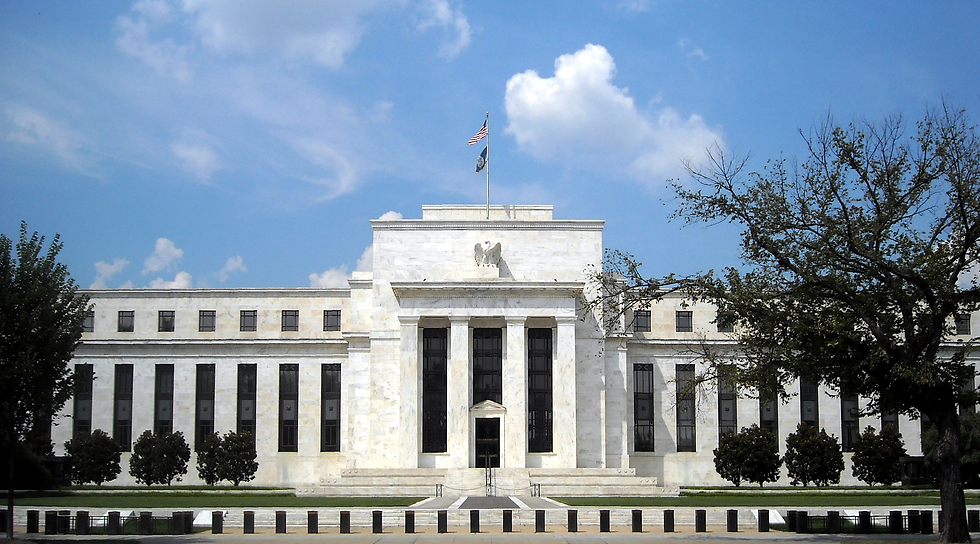
Figure 7.1: Central banks are the ultimate backstop of financial system stability — their ability to create money and provide emergency liquidity makes them the only institution capable of stopping a liquidity spiral.
Understanding how crises form leads directly to the question of how they can be prevented or managed. Economists and policymakers have developed a toolkit over two centuries — from Walter Bagehot's 1873 principles of central banking to the post-2008 Basel III regulatory framework. No tool is perfect; each creates its own side effects. But together, they represent the best set of defenses available.
Policy Tool 1: Lender of Last Resort (LLR)
The concept of the Lender of Last Resort was formalized by Walter Bagehot, the 19th century British journalist and financial commentator, in his 1873 book Lombard Street. His prescription remains the foundation of modern central banking crisis response:
🔑 KEY CONCEPT Bagehot's Rule (1873) "To avert panic, central banks should lend freely, to solvent institutions, against good collateral, at a penalty rate above the market rate." The logic: if solvent banks know they can always get cash from the central bank, there is no reason for them to panic-sell assets or refuse to lend to each other. |
In practice, implementing Bagehot's Rule in a real crisis requires making real-time judgments that are extraordinarily difficult. Is an institution solvent or merely illiquid? In the fog of a crisis, with asset values collapsing and counterparty exposures unclear, this distinction can be impossible to determine with certainty. The Federal Reserve made the judgment in September 2008 that Lehman Brothers was insolvent and did not rescue it; it made the opposite judgment about AIG 24 hours later and provided $182 billion.
The risk of the LLR function is moral hazard. If financial institutions believe they will always be rescued, they have reduced incentive to manage risk carefully. Post-2008 reforms attempted to address this through 'resolution mechanisms' — pre-planned procedures for winding down failed institutions in an orderly way without taxpayer bailouts. How effective these will be in the next crisis remains to be tested.
Policy Tool 2: Deposit Insurance
Deposit insurance is the most elegant crisis prevention tool ever devised. By guaranteeing deposits up to a certain limit, it eliminates the rational incentive for depositors to run. If you know your $100,000 is insured by the government, there is no reason to rush to the bank — even if you suspect the bank might be in trouble. A bank run is a self-fulfilling prophecy; deposit insurance severs the feedback loop before it starts.
The US Federal Deposit Insurance Corporation (FDIC) was established in 1933, in direct response to the waves of bank runs that had destroyed thousands of US banks in the early years of the Great Depression. Between 1929 and 1933, nearly 10,000 US banks had failed. After the FDIC was established, bank runs effectively disappeared for 75 years — until 2007.
The key vulnerability: deposit insurance only covers deposits up to the insured limit (currently $250,000 per depositor per institution in the US). Silicon Valley Bank's failure in March 2023 demonstrated that this protection is hollow for the institutional depositors — tech startups and venture capital firms — who comprised 94% of SVB's deposit base. These large depositors are not covered, and when they run, they move billions in hours via digital banking — a bank run that completes before a regulator can intervene.
Policy Tool 3: Macroprudential Regulation
Macroprudential regulation refers to system-wide rules designed not to protect individual institutions from their own bad decisions, but to prevent dangerous concentrations of risk from accumulating across the entire financial system during boom periods. The goal is to reduce systemic vulnerability before a crisis, rather than to manage one after it starts.
Loan-to-Value (LTV) Limits: Caps on how much of a property's value can be borrowed against. Requiring a 20% down payment means housing prices must fall more than 20% before a mortgage goes underwater — building in resilience.
Debt-to-Income (DTI) Limits: Caps on how large a loan can be relative to the borrower's income. Prevents the 'NINJA loans' (No Income, No Job, No Assets) of the 2007 subprime era.
Countercyclical Capital Buffers: Requirements for banks to build up capital reserves during economic booms — when lending is expanding and risk is accumulating — so they have buffers to absorb losses when the cycle turns.
Basel III Capital Requirements: Post-2008 international banking standards requiring banks to hold at least 7% of risk-weighted assets as common equity — up from the approximately 2% that was typical pre-crisis.
📣 QUOTE "Whatever it takes." — Mario Draghi, ECB President, July 26, 2012 — three words that ended the Eurozone sovereign debt crisis. By signaling unlimited central bank support for Eurozone government bonds, Draghi eliminated the mechanism by which market panic could self-fulfillingly destroy sovereign creditworthiness. |
Discussion Questions
These questions are designed to push beyond recall and into analysis. There are no single correct answers — they represent genuine ongoing debates among economists, policymakers, and philosophers of markets:
The Regulator's Dilemma: How can regulators effectively combat regulatory arbitrage when the pace of financial innovation consistently outstrips the pace of legislative change? Is it better to regulate institutions (what firms are allowed to be) or activities (what anyone is allowed to do)?
The Ethics of Bailouts: Is a 'Too Big To Fail' bailout ever ethically justified, given the moral hazard it creates? If no bailouts are ever credible, does that make the system more or less stable? Consider: the 1929 banking collapse, where banks were allowed to fail en masse, led to the Great Depression — 25% unemployment and a decade of misery. Was that the better outcome?
Rational Irrationality: If each individual act of herd behavior is individually rational (protect career, follow consensus, avoid being wrong alone), but the collective outcome is catastrophic, what institutional changes can produce better collective outcomes? Does the problem lie with incentives, information, or something deeper in human psychology?
The Lessons We Don't Learn: Tulip Mania (1637), South Sea Bubble (1720), Railway Mania (1840s), the Great Crash (1929), Savings and Loan Crisis (1980s), Dot-com (2000), Global Financial Crisis (2008), Cryptocurrency Crash (2022). Why do each successive generation of investors believe 'this time is different'? What would it take to actually learn the lesson?


Comments